
Tomorrow is July 4th, and if you’re already feeling a low-level dread about it, I want to start here: you’re not weird.
July 4th is one of those holidays that comes with a lot of pressure attached. There’s an expectation that you should be excited — that you should want to go to the cookout, stay out late, ooh and aah at the fireworks. And for a lot of people, that expectation collides hard with what their nervous system is actually doing.
Loud, sudden, unpredictable noises are one of the most reliable anxiety triggers there is. Crowds — dense, loud, often hot and uncomfortable — layer onto that. If you have a history of trauma, PTSD, or hypervigilance, fireworks can activate your fight-or-flight response in ways that feel completely out of proportion to what’s “supposed” to be a fun evening. Your body isn’t wrong. It’s doing exactly what nervous systems do.
What’s Actually Hard About This Holiday
Let me name the things I hear most often:
The noise. Fireworks are loud, sudden, and start before you expect them to and go on longer than you want. Even if you know they’re coming, your startle response doesn’t always care. For people with PTSD or heightened nervous system sensitivity, this isn’t just annoying — it’s genuinely activating.
The crowds. July 4th gathers a lot of people in the same places at the same time. If crowds make you anxious, there’s no avoiding that reality. The proximity, the noise, the heat, the inability to easily leave — it’s a lot.
The social pressure. “You’re coming, right?” is a sentence a lot of people with holiday anxiety dread. There’s a particular kind of exhaustion that comes from having to explain why you’re not fine, or from pretending you are.
The disruption to routine. Anxiety often stabilizes around predictability. July 4th blows up the week — neighbors setting off fireworks through the night, pets distressed, sleep disrupted. Even if the holiday itself is manageable, the surrounding week can be depleting.
You Don’t Have to Choose Between Going and Hiding
This is the part I most want you to hear. You don’t have to white-knuckle your way through an experience that genuinely overwhelms you. And you also don’t have to spend the whole day alone in a dark room if that’s not what you want.
There’s a lot of space in between.
Give yourself explicit permission to leave early. If you’re going to a gathering, decide in advance what your exit condition is. “I’ll go for two hours” or “I’ll stay until the fireworks start and then head home” — that’s a complete plan. You don’t owe anyone a full evening.
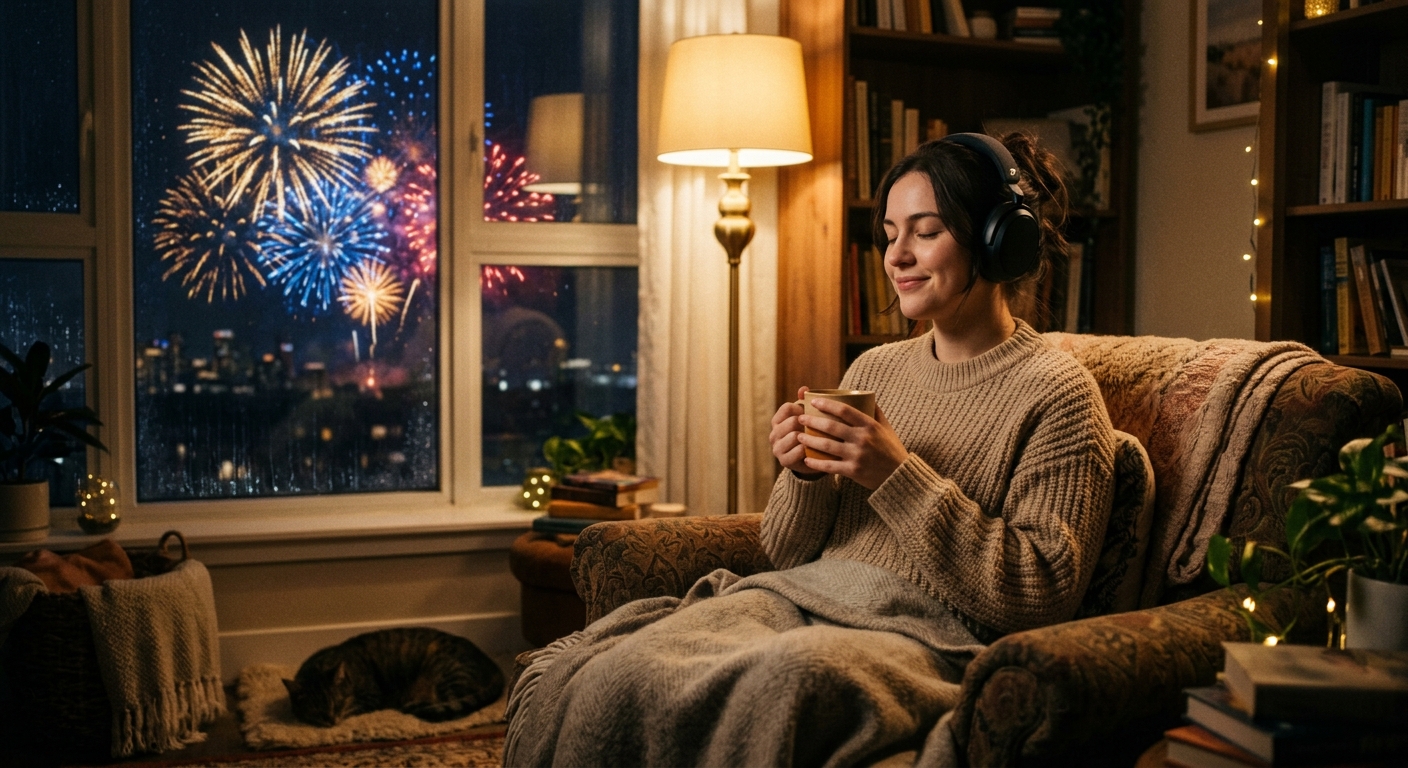
Have a quiet version ready. If you know fireworks are hard, plan what you’ll do instead of watching them. A favorite show you’ve been saving. A book. A walk somewhere away from the noise before it starts, or after. Having a positive alternative makes it easier to skip the hard part without it feeling like pure avoidance.
Noise-canceling headphones are not cheating. If you’re going to be somewhere loud, wear them. You can still be present, still participate in conversation, still watch the sky — with significantly less sensory load. This is harm reduction, not withdrawal.
Tell one person. You don’t have to explain your anxiety to the whole group. But having one person at the gathering who knows you might need to step away, or that crowds are hard for you, takes some of the pressure off. You don’t have to navigate it entirely alone.
If You’re Staying Home
Choosing to opt out entirely is a valid choice. I want to say that clearly, because I know a lot of people struggle to make it without a side of guilt.
If you’re home tomorrow night: close the windows, put on something calming, let your pets be close if that helps. If the fireworks are loud in your neighborhood, noise-canceling headphones or even just music through earbuds can take the edge off. Some people find weighted blankets grounding during high-stimulation periods.
You don’t have to perform enjoyment of a holiday that isn’t landing for you this year.
The Morning After
July 4th nights can be activating even when you managed them well. If you wake up on July 5th feeling depleted or emotionally flat, that’s a normal nervous system response to a high-stimulation period. Give yourself a slow morning. Eat something. Go outside if you can.
You got through it. That counts.
If you’re navigating anxiety, trauma, or nervous system dysregulation on a regular basis — not just on holidays — therapy can help. I work with adults in Louisiana and virtually across several states. You can reach me at mindfulsolutionsnola.com to learn more.
If you’re in crisis, please reach out to the 988 Suicide and Crisis Lifeline by calling or texting 988.